
Go for the Gold
With the Summer Olympics now happening in Brazil, many are watching their countries compete for a gold medal. It’s an exciting time for many – but what about spiritual relevance? In My Heart, My Life, My All, William MacDonald writes about the spiritual applications that can be gleaned from the games.
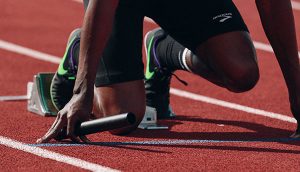
While I was writing the previous chapter, the Summer Olympics were going on in Atlanta. The world was witnessing some superlative examples of commitment from an earthly standpoint.
Every four years athletes from about 197 countries gather for the Summer Games. Mostly young people, they are the best that these countries can send to compete in the various sports. As far as physical prowess and skill are concerned, they are world class. Countries don’t waste their money on second-rate athletes. They want the best.
Preparation
How are these exceptional young people sorted out from the common herd? No doubt, they have natural ability in their sports. Their bodies were created with just the right coordination of mind and muscles. But that is not enough. Before coming to the Games, they have practiced almost interminably. For example, one swimmer is reported to have practiced ten hours a day, six days a week, for seventeen years. The U.S. women’s synchronized swimming team practiced swimming six hours every day and did aerobic exercises every day for a full year. That kind of discipline is typical of the winners. Behind every gold, silver, or bronze medal are years of disciplined practice.
Motivation
These athletes have enormous motivation. They are going for the gold. They are forever looking forward to the time when they will appear before the judges and when the victor’s medal will be draped around their neck. They dream of the fame that could come to them, and of the money they might receive from lucrative endorsement deals. They anticipate the tumultuous cheers of the crowd.
Their minds are focused. They do not waste their time on trivia. If they are gymnasts, they are dedicated to refining their routines. No pain or weariness is allowed to interfere with their goal. Many of the normal relationships of life have to take second place. One thing and only one thing occupies their minds—that gold medal.
They have disciplined their bodies and brought them into subjection. They could have “pigged out” with favorite foods and drinks, but they knew that if they did, they couldn’t win. They realized that they had to be temperate in all things.
Every sport has its own language, and the athletes master that language. They add new words to their vocabulary. They consider it a small price to pay.
Then come the eliminations. One by one the aspirants are dropped until the best person or team has proved itself.
Competition
Finally the Olympic games arrive. This is the moment of a lifetime, the goal toward which the athletes have striven, worked, practiced, dreamed. As they come front and centre, we notice the determined look on their faces. No silly, sickly smiles. They are going to give it all they have.
Every nerve is stretched. Every muscle is tense. They’re off! With all the determination of which they are capable, they give it their best.
Of course, they must observe the rules of the contest. Any deviation will result in a loss of points, and could cost them the prize. They divest themselves of everything unnecessary. This is not the time to wear attention-getting clothing or burden themselves with accessories that would add to their weight load.
Many of the sports require enormous endurance. Those bodies take a terrible pummeling. But there is no holding back. No pain, no gain. No price is too great to pay. Oceans of emotions flow. Often those who fail to win break down in anguished sobbing. It seems that years of preparation have gone down the drain in a moment of time. For some, hopefully, there may be another chance.
One young gymnast performed her final vault in the team competition with a sprained ankle. She did it voluntarily. And it was worth it when she won the gold medal for her team.
The winners experience a moment of exhilaration when they stand as their national anthem is played. They walk away with their medal, the coveted prize.
Christians who watch the games cannot help seeing spiritual applications. The similarities and contrasts are striking.
God is looking for the best contestants. In His case, however, the best are not the ones that the world would choose. They may be the ones whom the world considers foolish, weak, base, despised—the nobodies (1 Cor. 1:27-28). The ones who are the best for God are the ones who give Him their best, who consider Him worthy of all they have and are.
Youth is God’s best time with the soul. It is when the metal is still molten and can still be shaped. It is the time when energy is high and when mental faculties are sharpest.
Christians, too, must practice. God calls us to the practice of holiness. “He delighteth not in the strength of the horse: he taketh not pleasure in the legs of a man. The Lord taketh pleasure in them that fear him, in those that hope in his mercy” (Ps. 147:10-11). Our practice is not physical; it is spiritual. For the believer, “…bodily exercise profiteth little: but godliness is profitable unto all things, having promise of the life that now is, and of that which is to come” (1 Tim. 4:8). This means shutting ourselves off from the noise pollution of the world to spend time in the Word, in prayer, in meditation, and in study. It means a life of consistent obedience to the Word.
Paul was probably thinking of the original Olympic Games when he wrote: “Do you not know that those who run in a race all run, but one receives the prize? Run in such a way that you may obtain it…Therefore I run thus: not with uncertainty. Thus I fight: not as one who beats the air. But I discipline my body and bring it into subjection, lest, when I have preached to others, I myself should become disqualified” (1 Cor. 9:24, 26-27, NKJV).
Read the rest of the story in My Heart, My Life, My All by William MacDonald.

Available online and in store from Gospel Folio Press for only $13.99 USD.