So also is the resurrection of the dead… 1 Corinthians 15:42
Through the dead, cold leaves of winter, fresh daffodil green thrusts bravely upward, opens a smiling face and turns toward the sun. Spring has come! Dear Christian, rejoice. You too shall break through cold death with new life and vigour and will turn your face toward the Son. —Donald L. Norbie
And is it so–I shall be like Thy Son? Is this the grace which He for me has won? Father of glory (thought beyond all thought), In glory to His own blest likeness brought! —J. N. Darby
…the cup which my Father hath given me, shall I not drink it? John 18:11
God is the most generous Person in the universe. He has given to “us richly all things to enjoy” (1 Tim. 6:17) and He gave many things to His Son to use for our blessing. Yet in the words of this verse we enter the holy place. How the Father could give such a thing to His only beloved Son escapes our reason and befuddles our senses. Yet He did. How the Saviour could lovingly and willingly drink that cup on our behalf exceeds our understanding and brings us to tears. Yet He did.
—Rick Morse
What was it, O our God, led Thee to give Thy Son? To yield Thy well-belov’d, for us by sin undone? —Anne Taylor Gilbert
Then on the third day Abraham lifted up his eyes, and saw the place afar off. Genesis 22:4
Who verily was foreordained before the foundation of the world… 1 Peter 1:20
Just as Abraham saw the place afar off in the distance, so our loving God in the eternal past saw the place where His beloved Son would be sacrificed. It is beyond human understanding to imagine that long before the foundation of the world, even before the fall of man in the garden, God had a plan to redeem sinners. —Sid Halsband
Before Thy hands had made, the sun to rule the day, Or earth’s foundation laid, or fashioned Adam’s clay, What tho’ts of peace and mercy flow’d, in Thy great heart of love, O God. —John Kent
Look not every man on his own things, but every man also on the things of others. Philippians 2:4
Paul was likely aware of some disagreement amongst the saints in the assembly at Philippi (Phil. 4:2). He had reminded them to be of the same mind (2:2) and now he reminds them not to be selfish. While it is true, we should be aware of our own needs, this should not stop us from being concerned for the welfare of others. When need is evident in others, let us strive to be a help to them. —Bob Cretney
Others, Lord, yes others, Let this my motto be, Help me to live for others, That I may live like Thee. —Charles D. Meigs
Give me understanding, and I shall keep thy law… Psalm 119:34
Give…thy servant an understanding heart to judge thy people. 1 Kings 3:9
…the children of Issachar…were men that had understanding of the times, to know what Israel ought to do… 1 Chronicles 12:32
With the scriptural admonition “…lean not unto thine own understanding” (Prov. 3:5) in mind, we would do well to ask God for wisdom and understanding as both the psalmist and young Solomon did. The result will be the same as experienced by the men of Issachar: “understanding of the times” and “knowing what we ought to do”.
—Wm. H. Gustafson
Teach me Thy way, O Lord, teach me Thy way! Thy gracious aid afford, teach me Thy way. —Mansell Ramsey
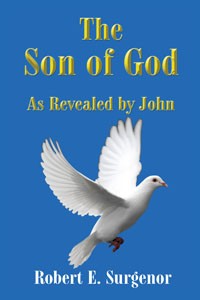
“Given all the books which have been written about the Gospel of John, is there room for yet another? Robert Surgenor’s publisher thinks there is, and tells the reader that this work ‘presents things that have never been considered by many. It is thought-provoking, stimulating, Christ-honouring, and presents a fresh view of the book of John’. The author tells us that, although he had read this Gospel many times before, yet in reading prayerfully and more carefully for this publication, things never seen before surfaced before him. His task therefore has been to convey to his readers these new insights.
The author begins by setting down twenty-two questions which, in effect, act as signposts to what is to follow. Although the book moves steadily through this Gospel, the seventeen chapters which form the main part of this work are not tied to the Gospel’s chapter divisions, but address themes – for example, ‘The Deity of Christ’; ‘Christ’s Movements and Miracles’; ‘Christ’s Power over Death’. Exposition there undoubtedly is, but the strength of this work lies in the author’s readiness to explore the spiritual significance of a verse, a word, or an action, moving the reader on from understanding to devotion. Typical of this is a comment on the anointing of Jesus’ feet by Mary, ‘Furthermore, I have been informed that, when a person’s body is anointed with spikenard, the fragrance of that precious ointment lingers on the skin for ten days. It was less than ten days before Jesus was crucified’. The implication is clear; the soldiers who crucified the Lord would smell the odour of the spikenard.
Those who are acquainted with Surgenor’s other writings will know that he is decided in his views, and forthright in expressing them. And so it is here. Written with clarity, this book will stimulate the reader to further study, and will fulfil the author’s stated aim, which is to glorify our Lord Jesus Christ.”
And in the morning, rising up a great while before day, he went out, and departed into a solitary place, and there prayed. Mark 1:35
The day had been extremely busy for Jesus. He had taught in the synagogue. He had healed Simon’s mother-in-law and then, as the sun began to sink and darkness descended, all sorts of people turned up at the door. Jesus then spent time healing the sick and casting out demons. It was utterly demanding work but before the sun rose the next day He had left the house and found a solitary place so that he could commune with His Father in prayer. Do we find that solitary place each day where we can pray and find spiritual renewal for the day’s activities? It is vital that we do! —Paul Young
O for a closer walk with God, in a calm and heavenly frame, A light to shine upon the road that leads me to the Lamb! —W. Cowper
Many there be which say of my soul, There is no help for him in God. Selah. But thou, O Lord, art a shield for me; my glory, and the lifter up of mine head. Psalm 3:2-3
David’s foes were saying there was no hope for him, but he confronted this notion by declaring that God was his “shield” and the “lifter” of his head. It is our natural tendency to hang our heads in discouragement during difficult trials. But David chose to peer heavenward and to wait for deliverance. The Lord uses pain so that believers may better identify with Him in His sorrow. Exercising deliberate confidence in the character of God when it seems unreasonable to do so, delivers our minds from the grip of depression. —W. A. H.
Fear not, I am with thee, O be not dismayed, For I am thy God and will still give thee aid. —John Wade
Only rebel not ye against the Lord, neither fear ye the people of the land…their defence is departed from them, and the Lord is with us: fear them not. Numbers 14:9
Confidence in the Lord is never misplaced. The wilderness-era Israelites were overly concerned with their enemies, especially the giants. Rather than look at their foes’ height, Caleb and Joshua remembered the size of their God. The highest heaven cannot contain Him (1 Kgs. 8:27); He is immense in His power, wisdom, and glory. Best of all, He is “with us”. —K. R. Keyser
The soul that on Jesus has leaned for repose, I will not, I will not desert to its foes; That soul, though all hell should endeavour to shake, I’ll never, no never, no never forsake. —J. Rippon
Then took he him up in his arms, and blessed God, and said…For mine eyes have seen thy salvation. Luke 2:28, 30
[Joseph of Arimathaea] went unto Pilate, and begged the body of Jesus. And he took it down, and wrapped it in linen. Luke 23:52-53
At both the beginning and end of the Lord’s life we see His body being handled by “just” men. One lifted Him up, while another took Him down. Simeon rejoiced in the provision of God’s salvation through His Son. Joseph of Arimathaea tenderly removed Christ’s body from the cross and laid Him in his own tomb. May we reverently lift Him up and bless God in our worship today! —Pete Smith
Praise the Saviour, ye who know Him! Who can tell how much we owe Him? Gladly let us render to Him, all we are and have. —Thomas Kelly