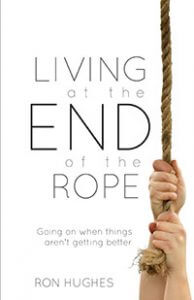
“Put yourself in someone else’s shoes and be ready to be challenged and encouraged. “Living at the End of the Rope” by Ron Hughes … is a raw but gentle look into the life of 10 couples and individuals. These lives have been damaged, sidetracked and crushed in various ways and yet the presence of grace is still powerful in their lives.
These men and women have come through deep adversity due to health problems, marriage difficulties and breakup, mental illness, death of a child or spouse, a special needs child or struggling with old age. They have faced (and still are facing) many battles, climbed many rough mountains and felt the blow of pain.
Yet, despite all of these struggles there is a foundation of hope. There is a clinging to the Lord that has enabled them to face each day. There is an encouragement to remember that God is faithful.
Every one of us face trials. Reading this book will lift your eyes higher and fix them on the only One who can help.”
Please read our Summer Newsletter! It is full of the latest Gospel Folio Press info – about our ministry, publishing, new webstore, and prayer points. Keep up to date on what’s been happening with Gospel Folio Press Trust!
Summer is a great time to sit and relax with a new book. Here at GFP, we’ve been reading through some great books that are both old and new. Here are some of our books that we have on the go:
In Upgrade, Michael Catt outlines the behaviors and mindsets of immature faith and explains how God equips and empowers us to enjoy the Christ-filled life promised to us in the Epistles.
Catt challenges us to accept the “upgrade” offered in Scripture to all Christians-not just an elite few-through the guidance of the Holy Spirit.
Don’t miss out on God’s best! “You can settle for mediocrity, trying to muddle through on your own strength, or you can claim your upgrade and start living up to your potential in Christ,” Catt writes, “The choice is yours.
“In order to learn what it means to be a woman, we must start with the One who made her.”
The author combines her observations and experiences in a number of essays on male-female relationships. In these days of conflicting demands and cultural pressures, what kind of woman do you wish to be? How should you respond? What should you think? Elisabeth Elliot is one of Christiandom’s most able and articulate writers. In this profound and moving book she presents her unique perspective. Now married a third time after losing two husbands through death, she offers golden insights which apply to the single, the married, and the widowed.These notes on womanhood, written to her daughter Valerie a few weeks before Val’s marriage, are a gift of lasting worth for all Christian women.
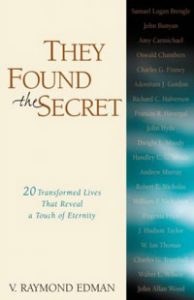
In They Found the Secret, Raymond Edman presents the lives of twenty well-known and little-known Christians. “The details of their experience of the crisis of the deeper life are delightfully different,” Edman writes, “yet their testimony to the reality of the joy and power of the Spirit-filled life is unanimous . . . It is [the Lord] who satisfies the longing soul. He is the secret of the exchanged life!”
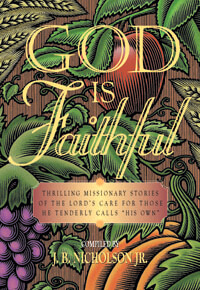
Thrilling missionary stories of the Lord’s care for those he tenderly calls “His own” … could be described by the words of Paul to the Corinthians: “as unknown and yet well known.” Many have left all that is familiar to take the gospel to places where Christ’s name has not been heard. The full story is yet to be told when “the Day shall declare it.”
“… worth the price of the book for the Arthur Gook chapter alone.” – Chris Cairns, Manager of Gospel Folio Press
Ahn E. Sook stood alone among thousands of kneeling people. Her bold defiance of the tyrannical demand to bow to pagan Japanese shrines condemned her to a living death in the filth and degradation of a Japanese prison. This brave woman remained faithful to Christ in the face of brutality, oppression, and ruthlessness of her captors. The story of how she won many of her fellow prisoners to Christ in the most deplorable conditions is an inspiration to all.
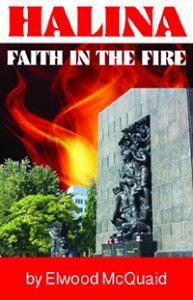
Poland was a country filled with beauty until the Nazis arrived in 1939.
This is the gripping, true story of two worlds that collided during World War II and the courage of a young Polish woman who fought in the Polish Home Army in Warsaw.
For Jewish people, it was the worst of times. Their world and that of the whole of Europe was being torn apart by a man who seemed to be a harbinger of the biblical, future Antichrist. For Christians, it was a time that tested their faith under horrendous circumstances.
In the midst of this raging fire stood Halina. Her story of personal trust in Christ, her triumph over evil and despair, and her sensitivity to those who suffered under the Third Reich remind us it is always right to fight wickedness and that God never abandons us.
The discount will be applied at checkout, no coupon or code needed.
* Sale online excludes Sunday School Material, eBooks, and gift certificates.
In stock items only.
Gospel Folio Press interviews Ron Hughes about his book, “Refresh: 19 Ways to Boost your Spiritual Life” which offers 19 ways to boost our spiritual life by preparing ourselves for His refreshing involvement:
“Although this book is just a brief summary of selected accounts in Luke’s Gospel, there are gems on each page; it is well worth reading, and definitely holds the attention. The book is pithy in its structure with lots of well-mined gems for us to contemplate and some helpful references from the Amplified version. Of the eleven accounts selected, seven are exclusive to Luke, whilst the remaining four, although shared with other gospel writers, have comments which are exclusive to Luke.
Describing Luke as somewhat obscure, by comparison with other evangelists, the writer quickly sets Luke’s characteristics before us: meekness, love, endurance and loyalty. For our encouragement, he also points out that God can, and will, use personal talents and skills, developed through hard work in whatever secular occupation we may follow, for His honour and glory. The Gospel of Luke treats the plight of the poor, the downtrodden and the despised with sympathy and understanding; the stories which the writer has selected reflect that very well. The book is written around eleven stories beginning with the nativity. The reader is then taken through the Gospel to the Emmaus Road and on to the Mount of Olives to witness the ascension. He does point out that the stories listed are just ‘the tip of the iceberg’, and the aim is that believers will simply catch a fresh glimpse of the Lord Jesus. It is by no means critical to say that there is nothing new in the book, but, rather, these are lessons and gems to be found in ‘those things which are most surely believed amongst us’.
Having arrived at Calvary, the writer deals with the detail in a devotional manner and summarizes the events by saying, ‘it is impossible for the human mind to comprehend such love and compassion’. From Calvary, he progresses to the Emmaus Road, where the Lord could say to His loved ones, ‘ought not Christ to have suffered these things, and to enter into His glory!’
In summary, the book is a brief account of Luke’s Gospel and is recommended.”
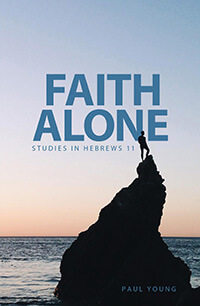
“You do not need a great faith, but faith in a great God.” Hudson Taylor
The word “faith” is so often subject to personal interpretations in our Western culture. This book examines the biblical truth of faith in terms of its meaning and application. The great people of God from the Old Testament as listed in Hebrews 11 reveal that the secret of success was their faith in the Lord. This was not a vagueness but a relationship which tapped into God’s greatness and brought wonderful blessing. That faith can be exercised today by true Christian believers.
The following pages open up in a very helpful way the “Mysteries of Scripture.” – W. R. Lewis
The word “mystery” in Scripture does not denote that which is mysterious. Its meaning therefore differs from that of its current use in English. In Scripture, it denotes that which, being outside the range of unassisted natural apprehension, can be made known only by divine revelation, and is made known in a manner and at a time appointed by God, and to those only who are illumined by His Spirit. In the ordinary sense, a mystery implies knowledge withheld; its Scriptural significance is truth revealed. Hence, the terms especially associated with the subject are “made known,” “manifested,” “revealed,” “preached,” “understand,” “dispensation.”
This modest volume seeks to explain, and expand on, 12 mysteries in the Word of God.
David summarizes the entire psalm in his opening decree: “Preserve me, O God, for in You I put my trust” (v. 1). In the first eight verses David details how he came to know the Lord as His full “portion” in life; in the last three verses he explains why he could joyfully trust the Lord in the face of death. Jehovah was David’s inheritance; apart from Him nothing had value or importance (v. 2). Consequently, while on earth, David enjoyed fellowship with “the excellent ones” (other righteous believers), who felt the same way he did about the Lord (v. 3). Companionship with these faithful saints was wonderful! On the contrary, David was determined not to commune with those who honored or served false gods (v. 4). Why? Because God had bestowed David with the best inheritance he could have ever imagined, Himself. This meant David was experiencing the best possible life, a life of full gratification in the Lord (vv. 5-6). While considering the Lord as his abundant portion, David is prompted to praise the Lord for His counsel and instruction, which had safely guided him through previous calamities (v. 7). Because of the Lord’s presence and strong hand, David was confident he would stand firm in His faith despite the attempts of his enemies to extinguish his life (v. 8).
David was confident God would preserve his life and that his body would not see decay in the grave at that time (vv. 9-10). Both Peter and Paul quoted David to confirm that there was a prophetic meaning to his statement relating to the future resurrection of Christ, the Holy One of Israel (Acts 2:25-28, 13:35-37). Clearly, these verses transcend David’s own experience, for his body did see corruption (his tomb is still in Jerusalem today). In David’s situation, God granted him deliverance from his enemies, but he could not escape death; it was inevitable. However, as it concerns Christ, this passage promises a glorious resurrection from death; therefore, as Hamilton Smith suggests, the entire psalm can be seen as tracing Christ’s life of faithful obedience which led Him into a solitary grave:
Psalm 16 is a prophetic description of the Lord Jesus in His lowly path through this world. He is viewed not in His divine equality with God, though ever true, but in the place of perfect dependence as the servant of Jehovah. It presents the inward life of faith before God, rather than the outer life seen before men. It is a life that has God for its object, so that it is a life lived to God, as well as before God.[i]
The New Testament attests to the resurrection of Christ, speaking of this spectacular event over one hundred times. Paul proclaims that without His resurrection we would not have eternal life or, by extension, hope (1 Cor. 15:12-19). Thus, both the cross and the resurrection of Christ compose the gospel message today (Rom. 10:9; 1 Cor. 15:3-4). Without Christ’s resurrection, saints would just be forgiven dead people with no hope of living for Christ now or having a future heavenly life with God. But this was not David’s confidence; he understood there was a “path of life” which permitted a glorious and joyful entrance into the eternal presence of God (v. 11). Likewise, believers can be confident death will never sever their fellowship with God (2 Cor. 5:8). Death has been conquered and its Victor is exalted and enthroned in heaven (1 Cor. 15:54-57). Truly, the Lord is our portion.
[i] Hamilton Smith, The Psalms, STEM Publishing, http://stempublishing.com/authors/smith/PSALMS.html
About the Author, Warren Henderson
Warren Henderson is an aerospace engineer. He now serves the Lord with his wife Brenda in “full time” ministry. They are commended from Believers Bible Chapel in Rockford, Illinois. Warren is an itinerant Bible teacher and is involved in writing, evangelism, and church planting. Warren Henderson has published many books including Be Holy and Come Near, In Search of God and The Evil Nexus: Are You Aiding the Enemy?
“This book has arisen from its author’s firm conviction that the message of the gospel is as relevant and as necessary for the people of our day as it was for those of the first century. It has been written with the express purpose of helping, at an introductory level, college and university students who will almost certainly come up against the influences of postmodernism in the course of their studies and to make an older generation aware of current thinking. It will also be suitable as a means of explaining the relevance of the gospel to the non-Christian.
In the first three chapters John Parkinson takes his reader carefully through the content of the gospel, and examines the reaction both of Jews and of Gentiles of the first century. He stresses the similarities between the polytheism, the philosophies, and the occult practices of Paul’s day, and the postmodernism and New Age mysticism of today. As the author takes us on from the modernism that sprang from the eighteenth century Enlightenment through to the relativism of our own day, he demonstrates the universal and enduring relevance of the gospel to fallen man. In so doing he is able not only to inform, but also to encourage believers to witness, confident in the knowledge that only the gospel can meet the deepest needs of the men and women of today.
The new edition of this valuable work, now offered with an appendix on postmodernism, is not for those believers who may wish to bury their heads in the sand. The author reminds us that, ‘it is also vital to understand that our young people are being educated in the language, premises, and terminology of postmodern philosophy. Ought we not, as parents, to be interested in what our families may be imbibing at school and university?’ This book will amply reward careful reading and reflection on its contents. Chapter 5, ‘The Question of Origins’, is pivotal. The Glossary of Terms is very helpful, and the Bibliography will encourage further study. This is a very valuable resource.”
“Mountains & Valleys in Christian Living is a delightful, easy reading and encouraging volume which contains a number of devotional and challenging meditations from the pen of Donald Norbie. As suggested within the preface, although there is no common theme to these meditations they are set forth to encourage the reader to put the Lord first in their lives and stimulate them to love and good works, Heb. 10. 24.
The seventeen meditations in all cover a variety of themes such as: The Security of the Believer (To cut the Covenant); Spiritual Growth (The truth about the Spirit and the washing of regeneration); Christian Acceptance (must we always agree?); A Pattern Life (mimics, Joseph, a pattern of faith and love); and Fruitful in Old Age (fear or faith, the sunset years) to name just a few. Each meditation is short and easily read within a few minutes whilst being interspersed with some of Norbie’s own poetry.
I found this book to be an enjoyable companion to pick up and read at opportune moments. Many of the meditations contain a precious jewel of practical truth which Norbie is able to present with clarity and challenge. Although not every meditation will be relevant to every believer who reads this book (for example those on old age), there is much in the book which is. I did not personally find the poetry to be so helpful, much of it having a theme of awe and wonder about creation rather than Christ.
Much of what Norbie writes is based upon a wealth of practical experience in Christian living and is, as a result, worthy of note and consideration. There is much too to draw the attention to the Lord Jesus and challenge us with regard to practical Christian living in Him. This book is recommended, but perhaps more appropriate for an older audience.”

 Living at the End of the Rope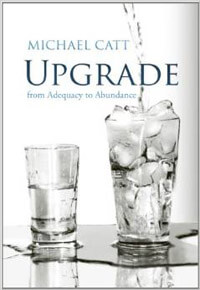






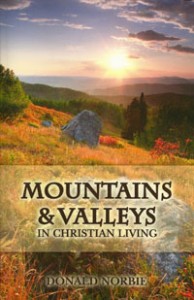 Mountains & Valleys in Christian Living